Why We Need to See Your Car Before Giving You a Repair Quote
When something goes wrong with your vehicle, it is natural to want to know one thing right away: How much is this going to cost?
You may call an auto repair shop, describe a noise or warning light, and hope to get an exact price over the phone. While a general price range may sometimes be possible for a clearly defined maintenance service, many automotive problems simply cannot be quoted accurately without seeing and inspecting the vehicle first.
At Greg’s Automotive Certified Services , we believe an accurate recommendation starts with understanding what is actually wrong with your vehicle. Bringing your car into the shop is often the best first step toward getting a meaningful and accurate estimate.
The Same Symptom Can Have Many Different Causes
One of the biggest challenges with quoting repairs over the phone is that a symptom does not always identify the failed part.
For example, you might call and say your car won’t start, the check engine light is on, the vehicle is overheating, you hear a grinding noise, the steering wheel shakes, or the air conditioning isn’t cold.
Each of these symptoms can have several possible causes.
A vehicle that will not start could have a weak battery, charging-system problem, electrical issue, fuel-delivery problem, or another fault. Until a technician evaluates the vehicle, quoting one specific repair could mean pricing a part your car may not even need.
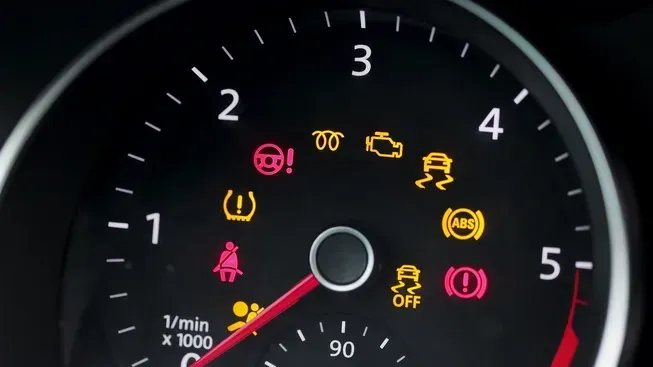
A Check Engine Light Is a Good Example
A check engine light does not tell you to replace one particular component. It tells you the vehicle’s computer has detected something outside its expected operating range.
Diagnostic trouble codes provide technicians with useful information, but they are generally a starting point for diagnosis—not an automatic parts list. Proper testing may be needed to determine why the code was triggered.
An accurate estimate comes after identifying the actual problem.
Vehicle Year, Make, Model, and Equipment Matter
Even when two customers need the same general repair, the cost can vary significantly between vehicles.
Parts pricing, labor time, engine configuration, trim level, accessibility, required fluids, programming, calibration, and other factors can all affect what is required to complete a repair.
A battery replacement on one vehicle, for example, may be straightforward. Another vehicle may require a different battery specification or additional procedures.
That is why knowing what repair someone thinks they need is not always enough to provide an accurate price.
A Noise Is Especially Difficult to Diagnose Over the Phone
Drivers are often very good at recognizing when their vehicle sounds different. Describing that sound over the phone is much harder.
One person’s “grinding” may be another person’s “scraping.” A vibration may seem like it is coming from the engine when the actual cause is somewhere in the wheels, drivetrain, or suspension.
The conditions under which the problem occurs matter too. Does it happen only while braking? While accelerating? At highway speeds? When the engine is cold? When turning?
A technician may need to inspect or road test the vehicle to reproduce the concern and narrow down the cause.
An Inspection Can Uncover Related Problems
Sometimes the component you suspect is only part of the story.
Worn tires might be related to an alignment issue. A battery that keeps going dead might actually be affected by another electrical problem. A cooling-system leak could have caused overheating that affected additional components.
Providing an estimate before seeing the vehicle creates a risk of leaving necessary work out of the quote.
Bringing the vehicle in allows the technician to evaluate the complete situation and determine what actually needs attention.
Why a Low Phone Quote Can Be Misleading
A quick phone quote may sound convenient, especially when you are comparing several repair shops. But the lowest number you hear is not necessarily the final cost.
If a repair is quoted based on an assumption and the actual diagnosis turns out to be different, the estimate may change once the vehicle is inspected.
A more useful question is:
What does my vehicle actually need, and what will it cost to repair it correctly?
The best way to answer that is usually to inspect the vehicle first.
Diagnosis Can Save You From Replacing the Wrong Part
Paying for diagnosis may feel like an extra step when you already have an idea of what is wrong. In reality, proper diagnosis can help prevent unnecessary repairs.
If one symptom can be caused by five different things, replacing the most common part without testing could leave you with the exact same problem—and another repair bill.
A technician can use inspection, diagnostic equipment, measurements, testing, and experience to narrow down the problem before recommending a repair.
That process is especially important for electrical problems, drivability concerns, engine issues, and warning lights.
When Can a Shop Give a Price More Easily?
Some services are easier to estimate in advance when the exact service and vehicle information are already known. These may include certain oil changes, scheduled maintenance services, battery replacements, and other clearly defined services.
Even then, your vehicle information may be necessary to determine the correct parts, fluids, and labor.
When you are calling about a symptom rather than a specific service , an inspection becomes much more important.
An Accurate Estimate Starts With an Accurate Diagnosis
At Greg’s Automotive Certified Services , the goal is not to guess at what your vehicle needs over the phone. It is to understand the problem, inspect the vehicle, and provide repair recommendations based on what is actually found.
That gives you a clearer picture of what is causing the problem, what needs to be repaired, what can wait, what parts and labor are required, and what the repair should realistically cost.
It also gives you an opportunity to ask questions and understand the reasoning behind the recommendation before authorizing work.
Auto Diagnostics and Repair in the Walnut Creek Area
If your vehicle is making an unfamiliar noise, displaying a warning light, driving differently, or simply does not feel right, bring it in so the problem can be properly evaluated.
Greg’s Automotive Certified Services serves drivers throughout Walnut Creek, Danville, Lafayette, Orinda, and Pleasant Hill, California.
Instead of relying on a guess over the phone, let our technicians inspect your vehicle and provide recommendations based on its actual condition.
Recent Posts